


Myopia tends to worsen year after year, especially during childhood. For busy Washington families balancing school, sports, and demanding work schedules, low-dose atropine eye drops offer a practical, medically backed option to help slow that progression.

What Are Atropine Eye Drops?
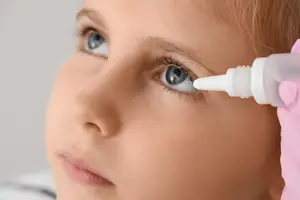
Atropine eye drops are a low-dose, prescription-only treatment used at bedtime to help slow the rate at which a child’s nearsightedness progresses. Unlike glasses or contact lenses, atropine doesn’t correct vision. Instead, it works at the biological level to help reduce excessive eye growth.
Research continues to show that atropine is safe, well-tolerated, and effective for many children. When combined with consistent monitoring, atropine can be an important part of a long-term strategy to protect your child’s vision.
How Atropine Helps Slow Myopia
Myopia develops when the eye grows longer than it should. Atropine helps reduce the biochemical signals that drive this excessive growth. Over time, this can help stabilize prescription changes and lower the risk of vision issues associated with high myopia later in life.
Many children use atropine on its own, while others achieve the best results through combination therapy with ortho-k, MiSight®, or Stellest® lenses.
Why Atropine Fits Busy Family Routines
Washington families often juggle full calendars, and myopia management needs to fit seamlessly into that rhythm. Atropine works well for many patients because:
-
It’s a once-per-night drop
-
It doesn’t interfere with school, sports, or screen-heavy days
-
It’s ideal for children who aren’t ready for contact lenses
-
It can be paired with other myopia control methods when needed

Who Is a Candidate for Atropine?
Atropine may be recommended if your child:
-
Is aged 4–15 with progressing myopia
-
Has had prescription changes over consecutive annual visits
-
Has a strong family history of nearsightedness
-
Isn’t ready for or doesn’t tolerate contact lenses
-
Needs a lower-maintenance option for busy routines
A comprehensive evaluation helps us determine whether atropine alone, or in combination with another treatment, is the right starting point.
Monitoring Progress at Eye Rx - Washington
Myopia management is most effective when it’s carefully monitored over time. We use advanced diagnostic tools and structured follow-up schedules to track your child’s response to atropine and ensure their treatment plan continues to meet their needs. Monitoring may include:
-
Prescription changes across visits
-
Axial length measurements when clinically indicated
-
Corneal health assessments
-
Symptom reviews and lifestyle considerations
FAQs Parents Ask
How long will my child need to use atropine? Most children use atropine for at least 2–3 years, depending on age and progression.
How quickly will we see changes? Atropine works gradually. You may notice fewer prescription jumps over 6–12 months of consistent use.
Can atropine be combined with other myopia treatments? Yes. Many children benefit from combination therapy, especially those with more aggressive progression.
How often are follow-up visits? Most patients are seen every 3–6 months, depending on age and clinical need.

If your child’s prescription keeps increasing, or if you’d like to explore atropine as part of a long-term plan to protect their vision, our team is here to help. Schedule a consultation and learn which myopia management options are the best fit for your child.